


Coaching sessions for sme/smi leaders
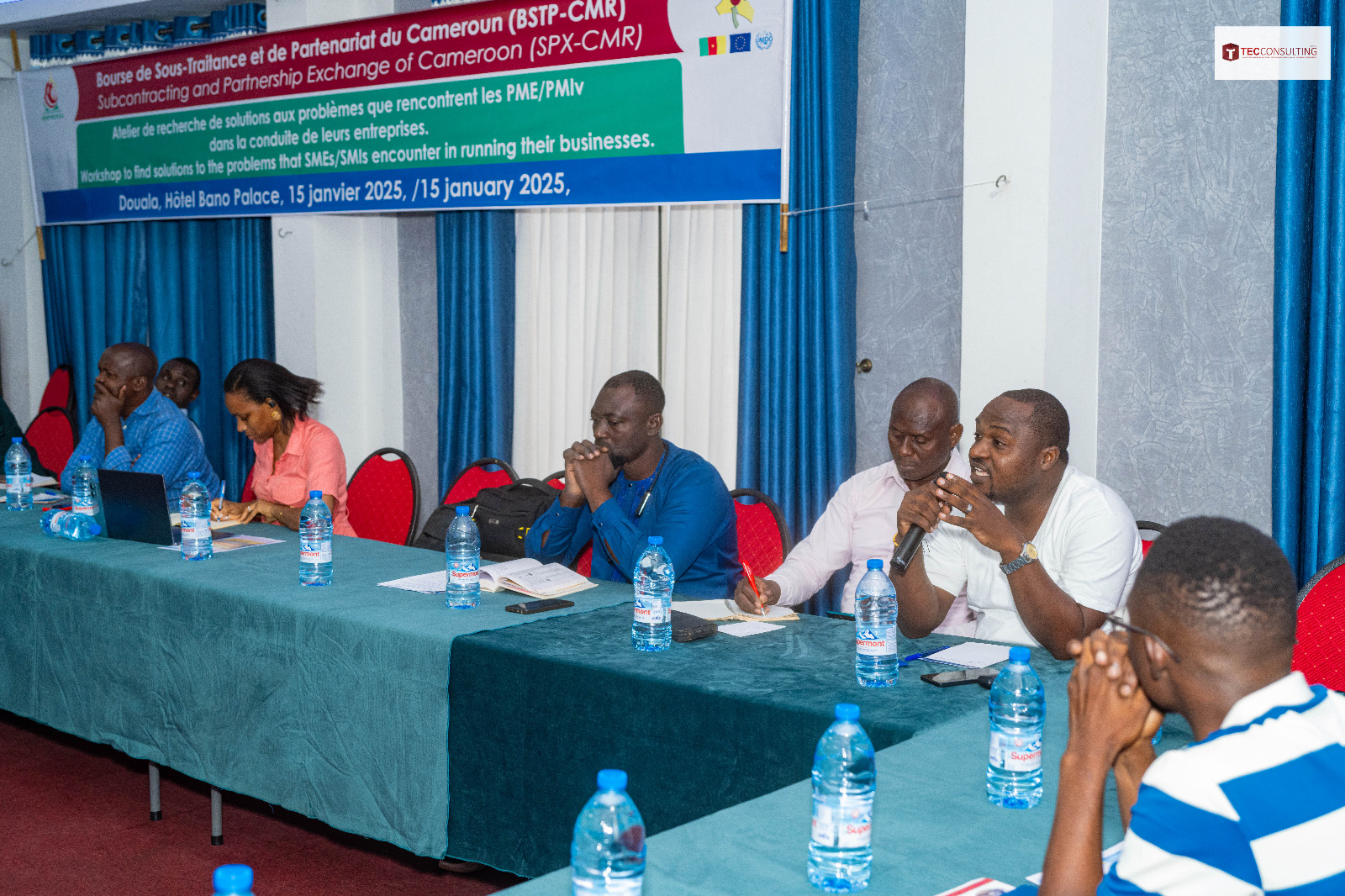
The first edition of this new exchange format offered by the Subcontracting and Partnership Exchange of Cameroon was held on January 15th at the Bano Palace Hotel in Douala, to the great satisfaction of the participants.
No workshop or training seminar organized by the Subcontracting and Partnership Exchange of Cameroon (SPX-CMR) has ever seen so much interaction and exchange of experiences among the participants. This was certainly the case on January 15, 2026, at the Bano Palace Hotel in Douala, during the workshop on structuring and growing a business. The participants, with the help of Théophile Tchaha, coach and main facilitator of the meeting, aimed to find solutions to the problems that SME/SMI leaders encounter in running their businesses.
"We cannot change the environment," he stated. “We must adapt to the environment and stop complaining about it,” advised the coach, following numerous speakers who relentlessly complained and blamed their businesses’ poor performance on the business environment. The business leaders generously shared their experiences and offered tips they commonly use to overcome difficulties.
These tips were noted by others who wouldn’t hesitate to try them. It became clear that to succeed and thrive in the long term, local SMEs employ various strategies and personal initiatives that help them to overcome challenges.
Security at the heart of all success
“Anything you can’t control isn’t your problem. If your employee decides to move to Canada, there’s nothing you can do about it, but if they leave your company for another local one, then there’s a problem,” argued ThéophileTchaha. He then offered a response to the situation, which surprised the participants considerably. "The main reason people leave one company for another isn't money, but rather security. Every worker seeks security," Théophile Tchaha asserted.
The coach concluded his remarks with several recommendations which, he believes, will allow SMEs to develop more effectively. Among other things, here commends that business leaders open their capital to other shareholders and no longer be content with 100% ownership. He also advises them to be persistent, patient, and to manage their businesses more with their heads than their hearts, and not to prioritize money above all else.
He maintains, however, that money has its place, especially cash flow, the quantity and availability of which must be secured. Reinvesting profits to foster growth is also a key governance practice for SME/SMI leaders, who must consider setting their own salaries and not confuse company funds with their own personal pockets. Théophile Tchaha recommends learning to communicate effectively without relinquishing control, and especially delegating certain responsibilities and tasks to specific employees.


